


Be the first to review “Camino de Santiago en Bici | Camino Francés” Cancel reply


FROM
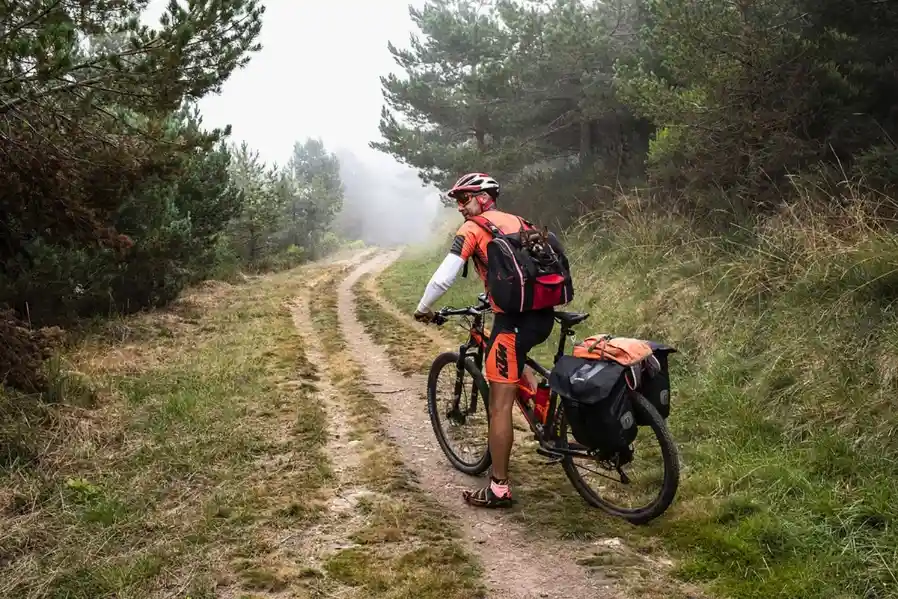
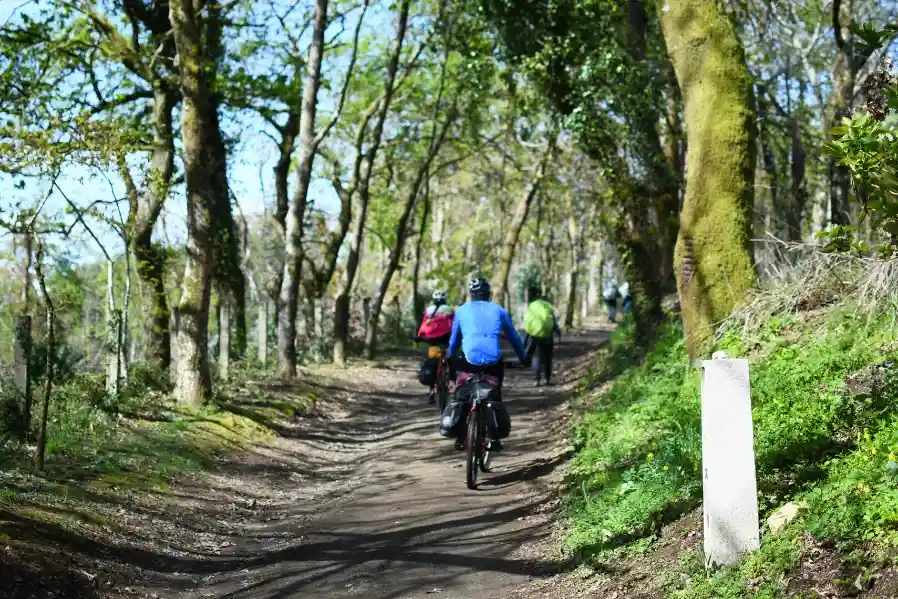
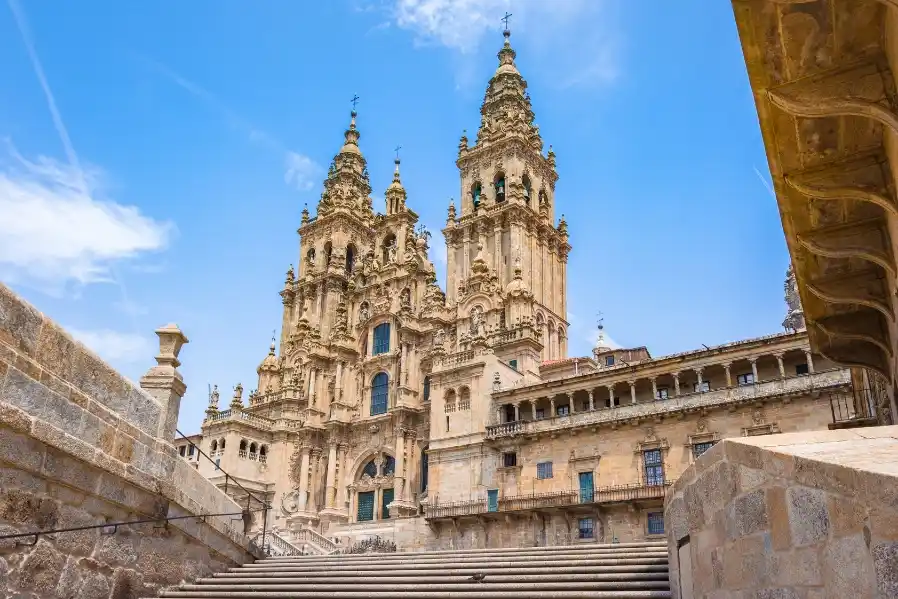
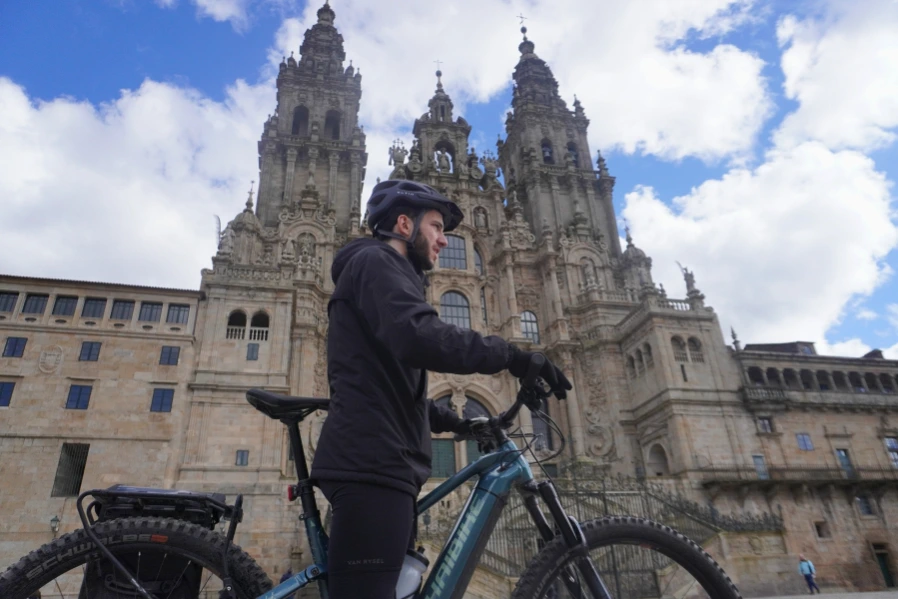
The French Way by bike from León is one of the most popular routes for experiencing the Camino de Santiago on two wheels. It allows you to combine sport, nature, and history as you travel through some of the most iconic landscapes of northern Spain on your way to Santiago de Compostela.
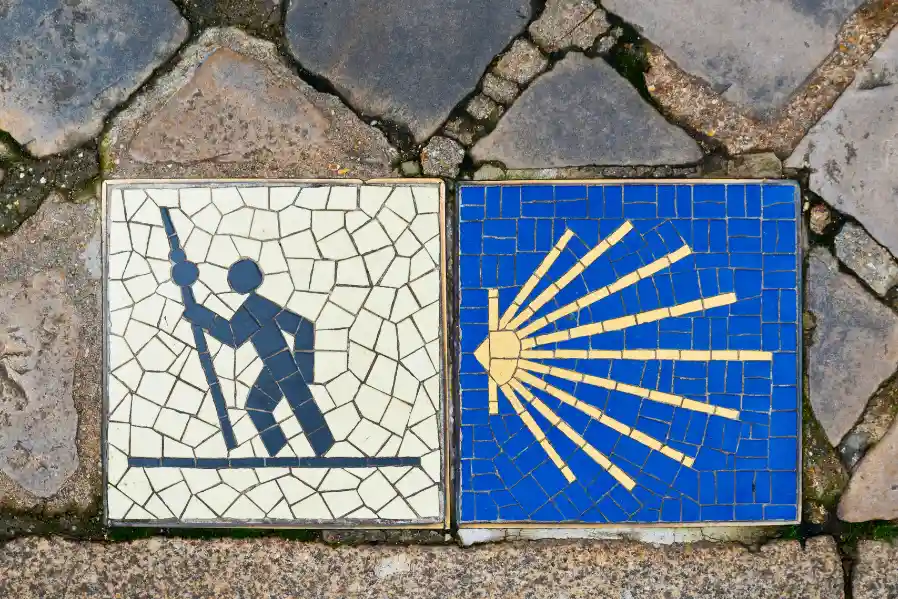
The French Way from León by bicycle is a route of approximately 300 kilometers that crosses Castile and León and Galicia. You will pass through emblematic places such as Astorga, Ponferrada, O Cebreiro, Sarria, and Portomarín, always following the official Camino signage.
The route is divided into several stages adapted to each cyclist's pace. It combines accessible sections with more challenging ones, especially in Galicia. Along the way, you'll enjoy the natural surroundings, cultural heritage, and traditions of the Camino de Santiago.
You'll cycle through diverse landscapes, from the Castilian plains to the Galician mountains. You'll pass through forests, country lanes, and charming little villages, enjoying an active experience connected with nature at every stage of the journey.
Along the Way, you'll discover towns of great historical value, churches, monasteries, and traditional buildings. You'll also have the opportunity to learn about the local culture and share the experience with other pilgrims, becoming part of a centuries-old tradition.
The French Way by bicycle from León is an accessible challenge for people with a moderate level of fitness. The stages allow for gradual progress, combining effort and enjoyment until reaching Santiago de Compostela.
Choosing this route means opting for an active and enriching experience. It's an ideal starting point for completing the Camino, enjoying diverse landscapes, and experiencing the Jacobean spirit intensely and authentically.
It's an ideal option for cyclists, active travelers, or anyone seeking a unique experience. It combines sport, nature, and culture in a route that allows you to discover the region in a sustainable and meaningful way.
Discover one of Europe's most iconic routes on two wheels and live a unique experience combining nature, culture and personal challenge until you reach Santiago de Compostela. Book now SendaEcoway.
⚠️ If you have any questions Contact us directly via WhatsApp
Day 1 – Arrival in León
León has always welcomed pilgrims, tourists, and travelers with open arms. This city will captivate you with some of Spain's most spectacular monuments. You'll be dazzled by the imposing façade of its Cathedral, which towers above the other buildings in the old town, and admire the stained-glass windows inside, considered among the most beautiful in Europe.
Also noteworthy are the Romanesque frescoes of the Collegiate Church of San Isidoro, known as the Sistine Chapel of Romanesque art, and the most important Plateresque façade, that of the Hospital of San Marcos. And of course, if you're passionate about Modernism, you can't miss Gaudí's Casa Botines.
You're in the perfect city to start your French Way from León by bike. A city that combines culture and gastronomy. Between the Barrio Húmedo (Wet Quarter) and the Barrio Romántico (Romantic Quarter), you'll find the perfect balance to combine visits to its rich architectural and cultural heritage with moments of tapas and relaxation.
Day 2 – Stage León – Astorga (49 km)
First day cycling the French Way from León! We started our route with a rather unpleasant and tedious stretch, the outskirts of León, full of residential and industrial areas with heavy traffic. To get to Hospital de Órbigo, you can follow the traditional route along the main road or take the alternative, which is a bit longer but avoids the traffic.
After crossing the impressive bridge at Hospital de Órbigo, the path again offers two options: road or countryside. The latter leads to the Cruz de Toribio viewpoint, from where you'll have spectacular panoramic views of the area.
Entering Astorga is quite straightforward, and less tedious than leaving León. The only complication will be crossing the railway tracks; pilgrims on foot use a pedestrian bridge, while cyclists can follow the main road and avoid having to carry their bikes up the stairs.
Years of cultural exchange, from its pre-Roman and Roman beginnings to its medieval and later splendor, have shaped Astorga into one of the most important artistic and cultural centers in Spain. This small city boasts a wealth of must-see monuments, including the rich Roman legacy, the Cathedral of Santa María, the Episcopal Palace (Gaudí's Palace), the Museum of the Ways, the modernist Casa Granell building, and countless churches, monasteries, and museums.
Day 3 – Stage Astorga – Ponferrada (54 km)
This stage is considerably more challenging than the previous ones, but it will reward you with spectacular scenery and panoramic views. Today you'll leave the Maragatería region and head towards Ponferrada, the capital of the Bierzo region. The LE-142 road will accompany you throughout the stage, with the pedestrian path running parallel to it. Some sections of the path are quite dangerous, so we recommend ignoring the signs and staying on the road.
The path gradually ascends to Rabanal del Camino, where we recommend stopping to rest and regain your strength before beginning the climb to one of the great landmarks of the French Way, the Cruz de Ferro (Iron Cross). The pilgrim ritual here is to place a stone that you have brought from your place of origin or that you have collected at the starting point of your journey.
After this brief stop on the Camino, you'll continue your route, beginning a long 18-kilometer descent to Molinaseca. Although some cyclists follow the footpath, we recommend taking the road for this section. Some paths are narrow, rocky, steep, and often run along the edge of ravines… It has it all! After passing El Acebo, we'll continue descending on steep slopes until we reach Molinaseca, where we can stop for lunch and a rest.
We say goodbye to Molinaseca, following the road or the parallel path until we reach Ponferrada and end the stage.
Day 4 – Ponferrada Stage – O Cebreiro (55 km)
We hope you rested well yesterday because today's session is going to be tough, especially in its final stretch.
We set off from Ponferrada following the same directions as the pilgrims on foot, as the route is perfectly suitable for cycling. We'll cross the verdant Bierzo valley via local roads, dirt tracks, and footpaths. If you prefer, you can also take the LE-713 to Villafranca del Bierzo, where you can stop for a break, and then take the N-VI and NA-006 to Las Herrerías.
From Las Herrerías onwards, it's time to shift gears because the real challenge of the day begins. No reward without effort! This will undoubtedly be the toughest climb of the entire route, so you're lucky you got it on the first day. Pay attention, as there are different signs for pedestrians and cyclists, although if you're experienced, you can stick to the original path.
We recommend taking the asphalt route, first taking the CV-125 until you reach the Laguna de Castilla and then covering the last 900 meters uphill on an asphalt track until you reach the unique village of O Cebreiro.
O Cebreiro is a place of incalculable ethnographic, natural, and cultural value. It boasts several restored examples of the traditional palloza, a characteristic mountain dwelling in Lugo where livestock and families shared living quarters. A visit to the Church of Santa María la Real de O Cebreiro is also essential; it's the oldest church on the Camino de Santiago, a 9th-century pre-Romanesque structure still in use. During your stay in O Cebreiro, you'll experience a magical Celtic retreat, a chance to disconnect and recharge, ready to continue what will surely be one of the best memories of your Camino.
Day 5 – O Cebreiro Stage – Portomarín (62 km)
You'll begin your stage by bidding a bittersweet farewell to the beautiful village of O Cebreiro. Today, two mountain passes await you: the Alto de San Roque, where you'll find a monumental statue of a pilgrim battling the wind, and the Alto del Poio, which will reward you with spectacular views of the surrounding region. The route can be followed by road or along the original path.
After summiting both mountains, it's time to descend. A steep downhill section will require you to use your brakes until you reach Triacastela, a good place to rest and have a drink. From Triacastela, you have two options: continue along the original route through San Xil, which is much more mountainous; or take the Samos variant, a highly recommended option if you want to visit the spectacular Samos Monastery.
Both paths converge near Sarria, the second largest town of the day, where you can stop for lunch and which offers all necessary amenities. From here, the last 20 km follow local roads through beautiful landscapes of hills and forests. Along this stretch, you'll find plenty of places to rest and refuel. The final leg of the day involves a spectacular descent that takes you to Portomarín, one of the most beautiful towns on the entire route.
Day 6 – Portomarín – Arzúa Stage (54 km)
Today's stage begins with a steep climb that will serve as a warm-up. Upon reaching Ventas de Narón, a descent begins towards Palas de Rei, a town with all amenities and the perfect place for the first stop of the day.
You'll continue your journey to Melide, now in the province of A Coruña. This section has quite a few ups and downs, which will make you feel the accumulated fatigue of the day. Upon arriving in Melide, the day's greatest reward awaits. You're in the capital of Galician-style octopus; there's no better place on the entire French Way to savor this delicacy. So grab a seat at one of its pulperías (octopus restaurants) and enjoy!
With a full stomach, we're sure you'll tackle the last 15 km of the day with renewed energy. This section winds through forests and narrow paths with the occasional steep climb. Upon reaching Ribadiso de Abaixo, the trail begins to climb sharply, eventually becoming a rather challenging ramp. This final effort will take you to the end of your stage in Arzúa, home to one of Galicia's finest cheeses.
Day 7 – Arzúa Stage – Santiago de Compostela (38 km)
Last day as a pilgrim cyclist! We recommend getting up early to arrive in Santiago de Compostela and make the most of your day in the city. This last stretch is the easiest of the entire route and is marked by more urbanized areas as you approach the Galician capital.
After cycling around Santiago Airport, the last climb of the route takes you to San Marcos, home to the Galician television broadcasting center. Upon reaching Monte do Gozo, we invite you to stop and admire the views; we assure you that you'll understand the reason for its name. Santiago is getting closer!
You're in Santiago! Feel happy and proud to have completed your French Way by bike from León. Now all that's left is to collect your Compostela certificate and enjoy an amazing day exploring the Galician capital.
Day 8 – End of trip
Congratulations! You've completed your French Way by bike from León. This last day is up to you: you can head home or enjoy another day in Santiago, resting your legs after all that pedaling. And isn't Compostela truly beautiful?.
Did you know that all roads lead to Finisterre? If you're still itching for a walk and have five more days to spare, we encourage you to complete the 90 kilometers between Santiago and Finisterre. This magical and spiritual route hides true treasures like Ponte Maceira, one of the most beautiful villages in Spain, and the extraordinary sunset from the Finisterre lighthouse.
Accommodation during the experience
The final list of accommodations will be provided once the booking is formalized, as its allocation depends on availability, the selected dates and the number of participants.
In any case, we guarantee quality accommodations, carefully selected after years of experience accompanying pilgrims. All of them are designed to offer the best rest and recovery after each stage of the Camino, combining comfort, a good location, and personalized service.
Accommodation options typically include hostels, guesthouses, and family-run rural guesthouses, with a limited number of rooms and welcoming common areas for sharing experiences with other travelers. The rooms, always with private bathrooms, are simple, comfortable, and unpretentious, yet warm and inviting.
In addition, you can choose between different types of rooms according to your needs: double, twin, triple or even quadruple rooms, ideal for those traveling as a family or in a group.
Transfers to León and back from Santiago de Compostela
Lunches and extra drinks.
Unspecified services or personal extras.
This trip is designed to generate a positive impact on people's well-being and the sustainable development of the destinations visited, aligning with the Sustainable Development Goals (SDGs):
SDG 3 (Good Health and Well-being): The experience promotes moderate physical activity, contact with nature, and adequate rest, contributing to the physical and mental well-being of travelers. In addition, comfortable accommodations and balanced stages are selected to encourage recovery and enjoyment of the journey.
SDG 11 (Sustainable Cities and Communities): We collaborate with local accommodations and suppliers that contribute to the economic development of the region, helping to keep rural communities alive and preserve their cultural identity. We also promote responsible tourism that respects the environment, traditions, and local way of life.
WE OFFSET YOUR CARBON FOOTPRINT
Reviews
There are no reviews yet.